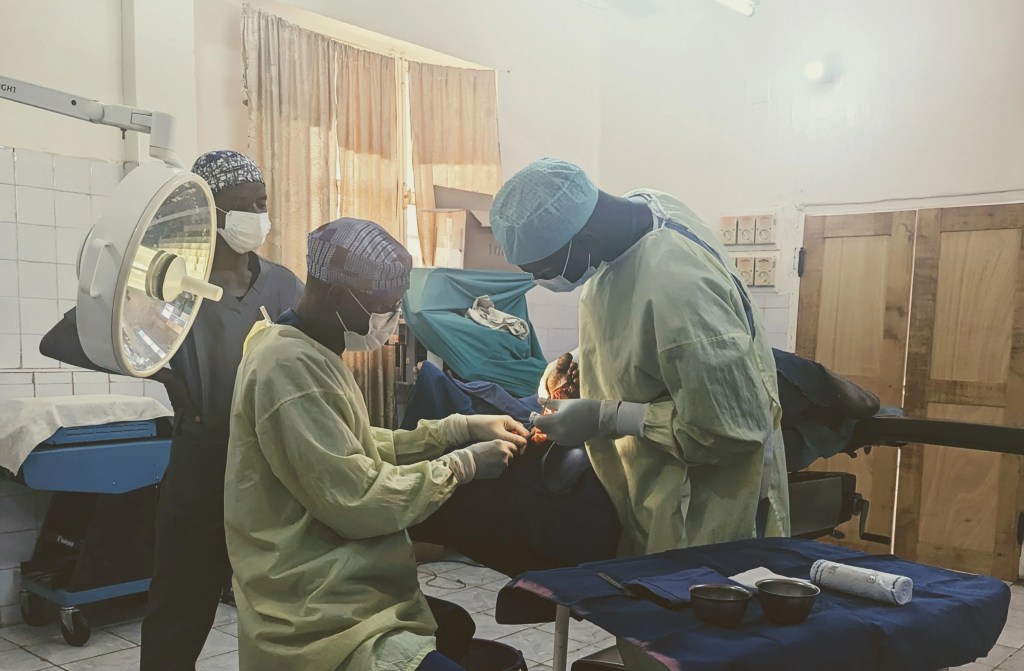
The little boy’s foot was completely black. Necrotic. The surgeon took one glance at it and said, “well that doesn’t look good.” The boy was crying in pain as we wrapped his wound. No pain medication given here, just a lollipop to help soothe the tears. What started out as a small thorn embedded in his foot turned into something deeper and deadly and, from my understanding, was never followed up with proper cleaning. Like many younger boys here, he probably was out playing or working in the fields, walking in the dirt without shoes on when he stepped on the thorn. Unfortunately, that thorn was going to cost him his foot.
For the past few months, I have been working in a rural hospital’s wound care clinic. I am quickly learning that wounds are not for everyone, but I think God has gifted me with a strange fascination for wounds, grit, and a good sense of smell (one cannot underestimate the power of one’s olfactory senses!) The hospital treats all kinds of wounds from necrotic to traumatic to chronic soft tissue infections to post-operative intestinal perforations (as a result of typhoid). We see to a lot of patients with wounds in the clinic, and surprisingly, most of the treatments are the same. For most wounds, we just use wet-to-dry Saline dressings, and sometimes Vaseline or even honey. Saline, cotton, iodine, bandages, honey, and Vaseline gauze are cost-effective local resources that the hospital pharmacy supplies. For most uncomplicated wounds, the body can heal its own wounds with a good clean, moist environment and some patience. A wound on the right to path to healing.
One might think that these are simple treatments for easily preventable wounds, but any wound here comes with a compounded history that determines its path to healing. Yes, most of these wounds could have probably been prevented with proper sanitation and hygiene at early onset, such as the boy with the necrotic foot. However, being in a poor area in the Sahel, the two usual suspects to rendering effective wound care difficult are access to running water and the know-hows (and practice) of general first-aid. (Just a disclaimer, I have yet to go on village visits myself to survey how wound care is performed. This post is not meant to be a commentary on water, sanitation, and hygiene at the community-level… but it could be an idea for another blog post!) In general, we have people coming in with gnarly (my favorite descriptor for “infected”) wounds that need immediate debridement. We debride, treat with antibiotics, and demonstrate how to do wound dressing changes before sending patients back home. Sometimes they return and the wounds are granulating and epithelizing (that red, bumpy “cobblestone-like” appearance) as they should. Or sometimes they come back, and the wounds smell repugnant the moment they walk in the door, and you know that when you open up that bandage it will be oozing with slough. They wince in pain. A wound gone bad.
Even bad wounds, though, are able to heal if they have the right support. As mentioned above, wound healing needs moist, clean environments and high caloric-protein nutrition. If the body is simultaneously fighting other infections or chronic diseases, like tuberculosis (TB) or diabetes, then that will also inhibit the wound from properly healing. For example, I have seen many severely malnourished kids with delayed wound healing. However, once we put them on TB medications, they started to gain weight and their wounds healed. It is an incredible transformation. This all goes to show that delayed wound healing needs to be investigated and treated urgently. Otherwise, grave consequences for unattended infected wounds, as seen with the boy and his necrotic foot, could result in cellulitis, osteomyelitis, or the bacteria spreading throughout the body (and can turn into sepsis). Unfortunately, at this point amputations are usually the last option.
The moral of this wound story is that no matter how complex wounds may appear with their layers of problems (both figuratively and literally), if the underlying impediments are treated (i.e. infection, malnutrition, other diseases) and they are being cleaned and dressed consistently then the body grows new healthy tissue.
In the end, “wounds gone bad” can turn around and heal.

 Day of Small Things
Leave a comment